
Busydiaries. Competing invitations. Limited time.
Senior leaders do not need another meeting in a nicer room.
They need a good enough reason to step away from the day-to-day, spend time with the right people and leave with something useful: a sharper relationship, a new perspective, a better conversation or a decision that moves things forward.
That is what a strong executive experience is designed to do.
The invitation has to earn its place in the diary from the first moment. It should be clear why this gathering matters, who will be in the room, what the experience offers and why the time will be well spent.
A highly exclusive venue.
A dinner with people worth meeting.
A respected speaker.
A private dining room
A seat at the chef’s table.
An overnight stay at somewhere exceptional.
Any of these can work.
But the value is not in how impressive the experience looks on paper. It is in how well it fits the people, the relationship and the reason for bringing them together.
Sometimes, the most valuable part is simply time to talk properly, away from the noise.
To turn that invitation into a yes, make the value explicitly clear:
- The setting.
- The company.
- The experience.
- The time commitment.
Make it worth their time before asking for their time.
1. Start with the reason, not the venue
An executive experience brings a carefully chosen group of senior decision-makers together, with the time, space and personal attention to make the gathering worthwhile.
This does not happen by accident. Before you start looking at venues, get clear on purpose.
- Is the aim to deepen an existing relationship?
- Open a more senior conversation?
- Bring peers together around a shared challenge?
- Create space for leadership alignment?
- Reward loyalty?
- Build confidence in what comes next?
That answer should shape everything that follows.
As we explored in our destination-first article, understanding the audience helps you choose somewhere that works for them and makes everyone feel welcome.
Some groups will enjoy being thoroughly spoilt on an overnight retreat or private yacht. Others will value a relaxed lunch, a private room, quality cuisine and uninterrupted conversation.
Spending more does not automatically make the experience better. Understanding the group helps you choose where the effort will count.
As Josie Bradley, Venue Finding Specialist at Venufindr, puts it:
“It is not about extravagance for the sake of it. It is about creating a shared moment.”
2. Think carefully about who is in the room
The guest list deserves as much thought as the experience.
In Everest Group’s 2024 poll of prospective executive conference attendees, 78% preferred networking through roundtables with peers who shared their roles and responsibilities.
The people around the table matter.
Look beyond job titles. Think about the mix.
Who would benefit from meeting?
What challenges do they share?
Who could offer a different perspective?
Who might help the conversation move somewhere useful?
Shared interests put guests at ease, while fresh viewpoints give them something to take away.
As Katherine West-Dargon, Head of Venues at Venufindr, explains:
“With an intimate group of six to 15 guests, you can give more attention to each person and create space for proper conversation.”
That attention matters.
Make introductions that give guests something to talk about. Notice who needs help joining in. Use speakers and shared activities to give the group a starting point, but do not over-programme the experience.
The best executive gatherings are hosted properly, then given enough space to breathe.
3. Choose a setting that gives people something to talk about
Once you know who you're bringing together and why, then think about where it should happen.
Somewhere they’ve always wanted to visit.
Somewhere they’ve never heard of.
Somewhere that feels like it’s yours for a while.
The right venue does more than look impressive. It sets the tone, makes people feel comfortable and creates the conditions for better conversation.
History, design, surroundings and hospitality give guests something to discover together. But the venue still needs to work hard...
Think about:
- Privacy: does the space feel properly yours? Are confidentiality considerations understood from the start?
- Conversation: Are the seating, acoustics and layout designed for people to hear, join in and relax?
- Service: Does the team understand the pace and tone of the experience?
- Flow: Can guests move easily between arrival, dining, discussion, activities and downtime?
- Comfort: Will guests feel looked after without feeling overmanaged?
Venufindr recommendations:
The team's recommendations offer a flavour of what’s possible.
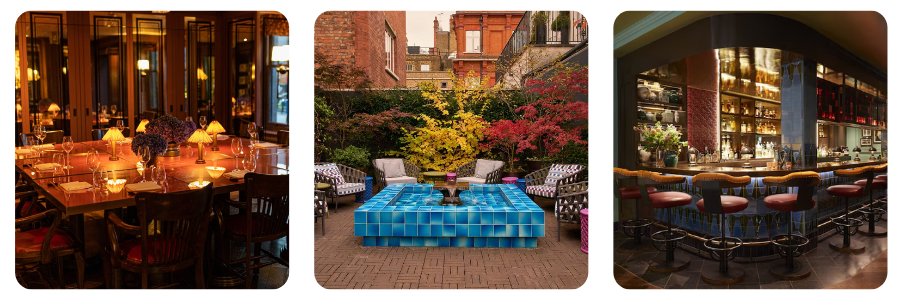
- Beaverbrook Town House has a residential feel. The Butterfly Room seats up to 16 for dining, with a private courtyard and Japanese dining adding to the experience.
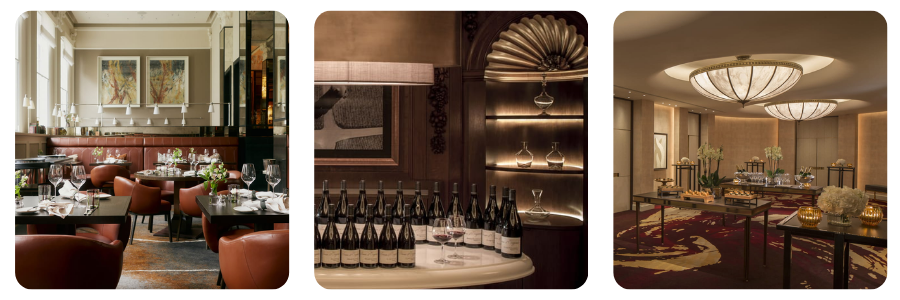
- Four Seasons Hotel London at Tower Bridge brings a sense of occasion through historic surroundings and private dining at La Dame de Pic and Mei Ume.
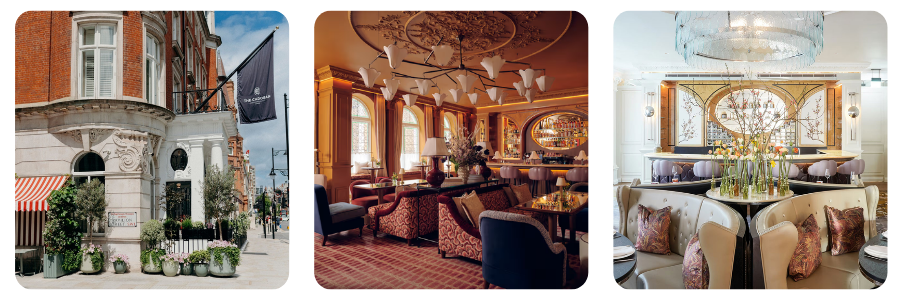
- The Cadogan for heritage and exploring Chelsea, The Newman for contemporary design and wellness and The Shepherd Mayfair for dining, cocktails and neighbourhood discovery.
The right venue makes an impression and makes connection feel effortless.
4. Match the experience to the people
You’ve earned their time. Now make sure the experience lives up to the promise.
Special touches work best when they belong to the place and appeal to the group. That could be time with a speaker who understands the challenges guests raised in advance. Private access to something connected to a shared interest. Or a dining experience that gives the group a story to share.
How we’ve seen this work in practice
For one client looking for something extra at The Cadogan, Venufindr suggested bringing the hotel’s literary heritage into the experience.
Signature cocktails and canapés were served in historic Room 118, where Oscar Wilde was arrested, now incorporated into the hotel’s Oscar Suite. Storytelling about his connection to the hotel and London brought that history to life.
Guests were captivated. The story sparked conversation around the dining table and gave them an anecdote to share with friends and family afterwards.
The detail matters: Give guests something to enjoy in the moment and a story worth taking home.
As Katherine explains:
“Some of the most memorable parts of an experience are the moments in between. The walk, the unexpected cocktail or the conversation after the meeting ends. Give guests time to enjoy them.”
5. Do not overfill the agenda
It can be tempting to pack the experience with content, speakers, activities and hosted moments.
But senior audiences are often most engaged when the format gives them space.
Space to talk.
Space to think.
Space to make the connection they came for.
That does not mean leaving the experience loose. It means designing it with enough structure to feel considered, and enough flexibility for the best conversations to happen naturally.
An executive retreat should not feel like a conference squeezed into a smaller room.
It should feel like time well spent.
6. Know what success looks like before you invite anyone
The experience ends. Your guests leave feeling their time was well spent. But what did it achieve for your business?
Set the objectives before the invitations go out, so they shape the guest list, venue, format and follow-up.
Attendance and feedback are not the whole picture.
Success might look like:
- A meeting booked
- A useful introduction made
- A relationship strengthened
- A decision reached
- A project moved forward
- A new opportunity opened
- A leadership team better aligned.
The follow-up deserves as much thought as the invitation. Share the resource discussed. Make the introduction promised. Send the note that shows you were listening. Act on the next step agreed.
Josie sees the follow-up as part of the experience:
“A client might talk more openly about a challenge or bring you into a conversation earlier than before. Those shifts can tell you the relationship has moved forward. The next step should feel like a continuation of that conversation.”
That is how an executive experience becomes more than a good day or evening.
It becomes something the relationship can build on.
7. Give guests a reason to say yes again
For a recurring series, consistency matters. Guests should come to expect thoughtful hospitality, interesting company, strong venues and a clear reason to make time for the next invitation.
That does not mean repeating the same format.
It means building trust that the experience (and their time) will be worth it.
When senior people know the room will be well chosen, the setting will be considered and the conversation will be useful, the invitation becomes easier to accept.
That is the real value of getting it right.
Executive experiences should earn their place in the diary
The strongest executive experiences are not built around luxury for its own sake.
They are built around people, purpose and the conditions needed for better conversation.
The right venue matters. So does the guest list, the hosting, the pace, the detail and what happens afterwards.
At Venufindr, we combine venue knowledge and trusted relationships to help you find somewhere that delivers on that promise.
Tell us who you’re bringing together. We’ll help you create an executive experience worth making time for. Get in touch.